
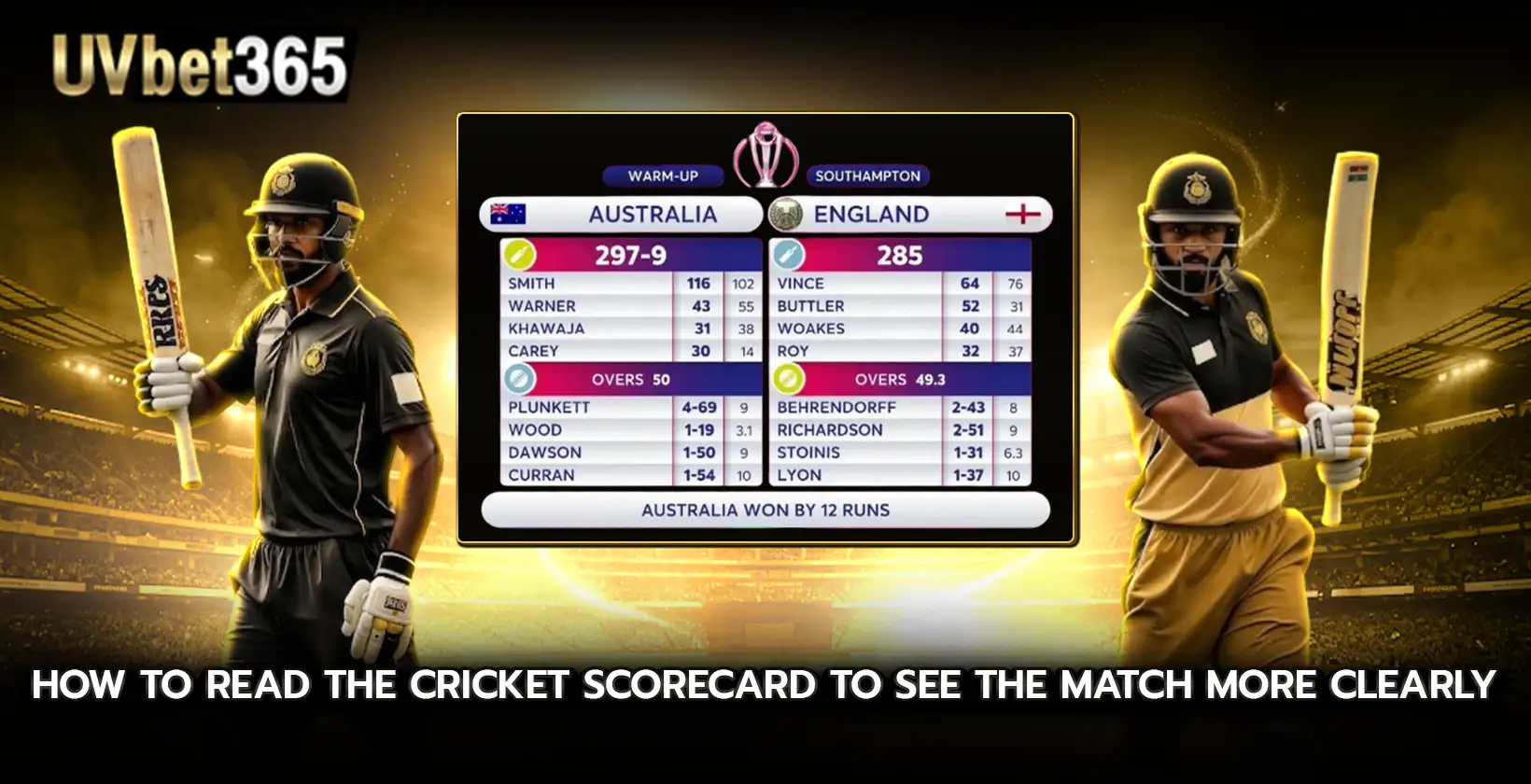
The Cricket Scorecard is not only for checking the overall score. It also helps reveal the rhythm of the match more clearly through key numbers such as run rate, dot balls, wickets lost, overs remaining, and boundary shots. These figures show whether a side is still in control, whether the contest is becoming tighter, or how much opportunity the chasing team still has left.
This becomes even more important during Cricket Live, because reading the match statistics correctly matters more when the rhythm of play can change very quickly within just a few overs.
For beginners, the most common mistake is looking only at the run total and quickly concluding that the game is balanced or that one team is clearly ahead. In reality, the combined numbers may still look close, while the shape of the game can be very different underneath. One team may not be far behind in runs, yet its momentum may already be slowing. Another may still be trailing, but its structure may still be strong enough to mount a comeback. If you know how to read the Cricket Scoreboard properly, you will be able to immediately see which side is still following its plan and which one is being forced to change tempo earlier than expected.
What the Cricket Scorecard Helps You See That the Total Score Cannot
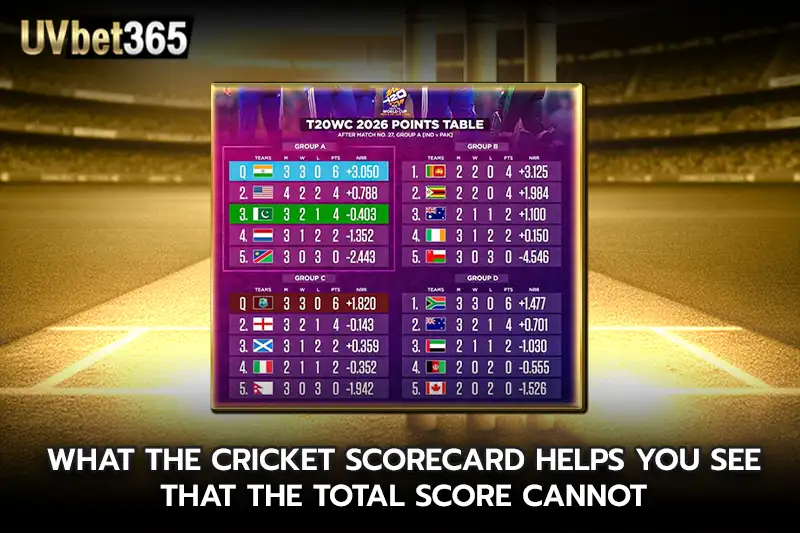
The total score shows the outcome that has already happened, but the scorecard shows how that outcome was built through each phase of the game. The total is the destination, while the scoreboard is the path.
Reading the Cricket Scorecard together with the Cricket Scoreboard allows you to understand the quality of the situation more deeply than by looking only at the final run total.
The Total Tells the Result, but the Cricket Scorecard Shows Where the Match Came From
If you look only at the total score, you will see which team is ahead or chasing, but not how those points were scored. The Scorecard reveals whether points came steadily or through short bursts of acceleration.
Although the overall score may reflect the broader picture of Live Scores, the Summary Statistics page shows more clearly how the team actually arrived at that point.
Why People Who Look Only at the Total Score Often Misread the Rhythm of the Match
In Cricket, similar scores do not always mean similar situations. One squad may have a similar total but fewer wickets lost, better consistency, and more overs remaining. Another may appear close but already be under pressure.
To understand the contest properly, you must read the statistics behind the total, not just the number itself.
How Run Rate in the Cricket Scorecard Helps Read the Pace of the Match

Run Rate is one of the clearest indicators because it shows not only how many runs have been scored, but how quickly they are scored.
What Is the Average Number of Runs Scored per Over?
This average shows how many runs a team scores in one over. The higher the figure, the more it reflects faster scoring. The lower it becomes, the more it suggests that scoring has slowed or that play is beginning to stall. For a beginner, simply understanding this number immediately changes the way the statistics screen is read, because the focus shifts from only the run total to the “speed of scoring” as well.
This matters because runs made quickly and runs made slowly do not carry the same meaning, even when the total appears similar. A squad that scores at a steady pace usually has more freedom in how it plays, while one that scores slowly may already be building pressure, even though the overall total still does not look too bad.
A Changing Average Shows Whether a Side Still Controls the Match or Needs to Accelerate
When the rate of Over/Under stays fairly stable, the contest is usually moving at a pace the squad can still manage. But if that number starts falling continuously, it is often a sign that play is becoming more difficult and that the squad may need to adjust tempo in the next phase.
The key point is not to look only at whether the figure is High or Low, but also at its direction. If the score is still moving but the pace of scoring is gradually fading, the overall result may not look damaged yet, but the shape of the contest may already be shifting toward a more pressured direction.
How to Read This Number as a Sign of the Match Trend
The easiest way to read it is to treat it as a signal of overall rhythm. If the figure remains stable, play is usually continuing at a controllable pace. But if the value starts to drop clearly, it often means runs are no longer flowing in the same way and the pressure of the contest is increasing.
In this section, this statistic should be used to read the “speed and trend” of the contest first. There is no need to rush to conclude whether the chasing side can recover, because that judgment requires several statistics, not just one figure.
In practical use, run rate is not only there to show whether the number is high or low. It can also be used as a signal for judging the rhythm of the contest. If the average per over starts falling continuously, it often indicates that the play is becoming sluggish and that the side is facing greater risk. If it remains steady or strong, it suggests the side still controls the overall rhythm.
How Dot Ball in the Cricket Scorecard Shows Pressure from a Stalled Score
A Dot Ball is another useful statistic that helps reveal the source of pressure during many phases of a game, because every delivery that produces no runs interrupts the scoring flow.
What Is a Ball with No Runs Scored?
A ball with no runs scored is a delivery that passes without adding any points. Although it may seem minor, once this number begins to build up, it affects the wider shape of the game because the score does not move while time continues progressing.
Why Does the Accumulation of Balls Without Runs Increase a Team’s Risk?
When a side goes through a stretch where the score does not move for several deliveries in a row, the pressure does not stay with just one ball. It carries over into subsequent deliveries because the side knows it must recover lost scoring opportunities. This is exactly where risk begins to rise. The side may need to accelerate or more away from its original plan to regain control of the contest.
That is why this statistic matters. It is the starting point of accumulated pressure, not just a single delivery producing no runs.
How to Read This Statistic Together with the Average per Over
If scoring speed helps show that the contest is slowing down, then balls without runs explain why it is slowing down. For example, if the average per over declines while the number of Dot Ball increases, it becomes clear that the contest is genuinely losing momentum rather than experiencing a brief slowdown.
Reading these two figures together helps show both the “cause” and the “effect” of growing pressure, making the game easier to understand than viewing each figure separately.
This becomes especially clear when following a Live Score Ball, because once the score stops moving for several deliveries, pressure begins to build immediately.
In practical use, dot balls should be treated as a warning sign rather than an isolated number. If dot ball starts appearing while run rate declines, it often shows that the momentum is being lost and the contest is shifting away from its earlier rhythm. Even without an immediate wicket, pro-longed dot-ball pressure can force riskier decisions and lead to mistakes later.
Why Wickets in the Statistics Table Matter More Than Lost Runs in Cricket
Balls without runs increase pressure because the score stalls, but wickets affect the contest in a more structural way. Losing a batter reduces a side’s options and flexibility. The more wickets lost, the harder it becomes to manage the innings effectively.
Losing a Wicket Can Change the Shape of the Match Immediately
When a lineup starts losing a batter, the shape of the contest often changes instantly. A new player needs time to settle, and the lineup may need to adjust its approach. Even if the innings was flowing well before, losing one batter can clearly interrupt momentum.
Additionally, losing a player changes the level of risk the side can afford. A side with fewer wicket lost can maintain its plan, while a side that has already lost several batters must play more cautiously.
Losing a Batter Early in the Innings and Losing One Late in the Match Do Not Mean the Same Thing
Losing a batter early in the innings usually has a greater impact on structure because there is more time for that effect to develop. It may force the lineup to slow down and reduce risk.
However, losing a batter late in the game has a different impact. While it may not change the entire plan, it can limit the team’s ability to accelerate during critical moments.
How to Read Wickets Together with Runs and Overs Remaining
Wickets should never be analyzed in isolation. They must be considered alongside the score, overs remaining, and overall situation.
If a lineup has time and a healthy score, losing one batter may not be critical. But for a chasing lineup with limited overs, each wicket carries much greater significance.
This is why wicket differs from dot-balls. They do not just slow scoring, they reduce the team’s structural options moving forward.
How the Cricket Scorecard Helps Evaluate the Chasing Side When Several Statistics Are Read Together
Once you understand run-rate, dot-balls, and wickets individually, the next step is to read them together. A chase depends not only on the total required, but also on time, rhythm, and team structure.
Using the Cricket Scorecard and the Cricket Scoreboard together, it becomes easier to determine whether the batting team still has control or is being forced into risky decisions.
What Signs Usually Appear on the Cricket Scorecard When a Chasing Side Still Has Hope
A team still in control usually shows:
- Consistent scoring flow
- Manageable run rate
- Limited wickets lost
- No extended scoring droughts
These signs indicate that the team is not yet under excessive pressure and can continue the chase with control.
What Signs Show That a Side Is Beginning to Fall Behind the Match
A clear warning sign appears when the target begins to look too high compared with the overs remaining. The required scoring rate keeps rising, dot-balls begin appearing more frequently, and the team starts losing too many batters while still needing a substantial number of points. A picture like this usually shows that the team is no longer chasing on its own terms, but is being forced by the game into taking greater risks.
The key point is not to rely on just one number. A team may still appear not too far behind, but if the quality of the innings rhythm has already started to break down, the true chance may be smaller than the overall run total suggests.
Why the Overs Remaining Matter So Much in Judging Whether a Side Can Still Come Back
The overs left represent the match’s remaining time. The fewer there are, the less room there is to recover. Even if the target still looks reachable, once time becomes limited, pressure rises immediately, because every over that passes without enough scoring increases the burden of the remaining stretch.
That is why, when reading a chase, you must always consider both the run gap and the time left together. Otherwise, it becomes very easy to misjudge the real chance of a comeback.
How Player Boundaries in the Cricket Scorecard Show Who Is Accelerating the Match for the Side
This section is not only about seeing who hits the most 4s or 6s. It also helps explain who is driving the tempo for the lineup during that phase of the contest, because a player who consistently produces boundaries often has a direct impact on both the team’s momentum and the overall flow.
How Quickly Can Boundaries Add Runs and Change the Rhythm of the Match?
The advantage of hitting a Boundary is that it increases the score immediately without needing to build through several deliveries. This allows the lineup to reduce pressure much faster, especially in moments when it needs to change the rhythm of the contest or restart scoring momentum.
That is why this part of the statistics is very useful, as it shows how much of the side’s scoring is being driven by attacking play.
H3: A Player Who Produces Boundaries Consistently Is Often the One Who Changes the Match Momentum
When a Cricket Players consistently finds boundary shots, the tone of the contest can change quickly. A phase where scoring has been slow can suddenly accelerate, pressure on the batting lineup decreases, and the team begins to regain more flexibility for the overs ahead.
From this perspective, Player Boundaries are not just an individual statistic. They also indicate which player is currently providing momentum for the team.
H3: Why You Should Not Read the Number of Boundaries Separately from Run Rate and Wickets
Although this statistics appears informative, it should not be viewed in isolation. A player may hit several boundaries, but the scorecard may still be losing too many batters, or the overall tempo of the contest may remain unstable.
For that reason, Player Boundaries should always be analyzed together with run-rate, wickets lost, and overs remaining on the scorecard. This helps determine whether the scoring burst genuinely supports the lineup or is simply a reaction to an already pressured situation.
H2: Summary: The Cricket Scorecard Should Be Read Through Several Statistics Together
The Cricket Scorecard becomes much more meaningful when the main statistics are read together rather than one by one. That is because Run Rate shows the pace of the match, dot-balls indicate where scoring begins to stall, wickets represent the loss of structural option, Team Evaluation of chasing squad reflects the overall match situation, and Player Boundaries show who is accelerating the scoring.
When these elements are understood together, the game becomes much clearer than simply looking at the total score, and the situation can be assessed more accurately through the numbers shown on the scoreboard.